October 2, 2026
How Large Should Your Conference Room Be? A Guide Based on the Number of Attendees
One of the first questions when organising a conference, seminar or corporate event is simple: how large should the conference room be? The answer, however,
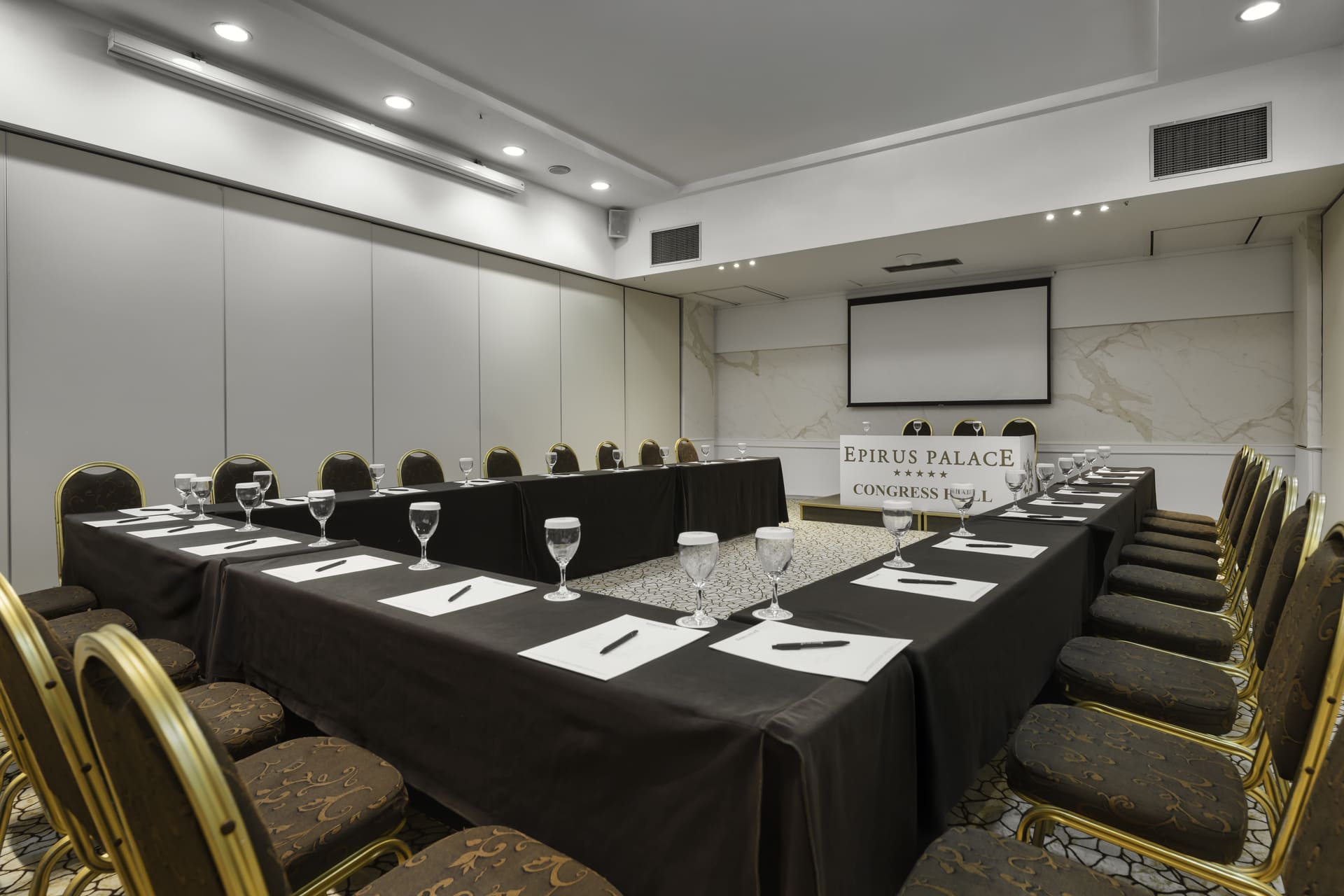
One of the first questions when organising a conference, seminar or corporate event is simple: how large should the conference room be?
The answer, however, depends on more than just the number of attendees.
An event for 100 people in Theatre Style requires a different amount of space compared to a workshop for 100 people with tables. Similarly, an executive meeting for 20 participants has entirely different requirements from a presentation for the same number of people.
Therefore, when searching for the right conference room, the number of attendees is the starting point — not the only deciding factor.
Let’s explore what you need to consider.
Why the Number of Attendees Is Not Enough
The stated capacity of a conference room usually refers to its maximum seating capacity in a specific layout.
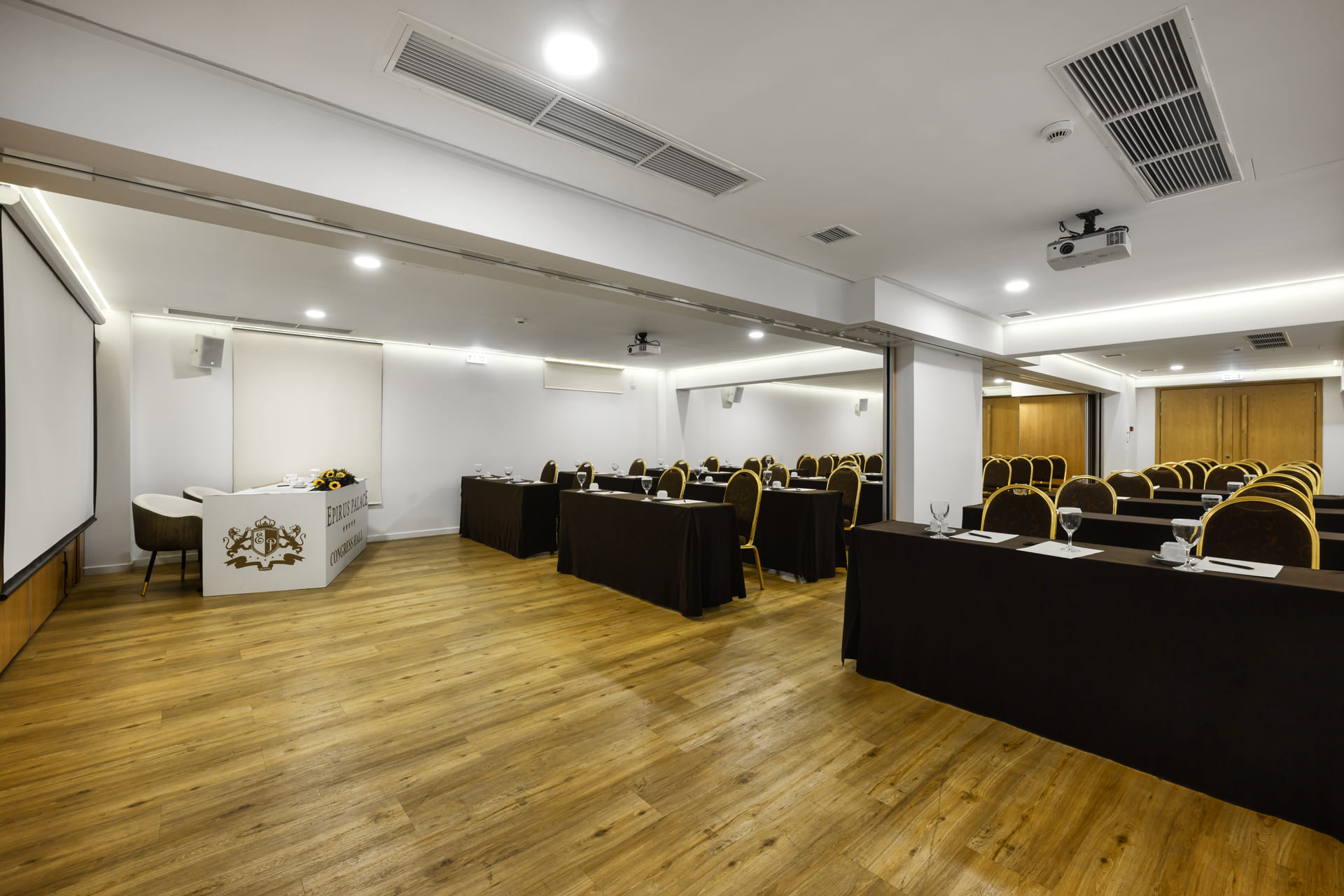
This means that a room capable of accommodating 300 people in Theatre Style will not necessarily accommodate the same number in a Classroom or U-Shape configuration.
Before choosing a venue, you should therefore consider:
- The expected number of attendees
- The type of event
- The required room layout
- Whether tables are needed
- Whether a stage or podium will be used
- Audiovisual equipment requirements
- Whether additional space is needed for registration, networking or coffee breaks
- Whether parallel workshops or meetings will take place
Considering these factors will help you make a much more accurate assessment of the actual room size your event requires.
Up to 10 Attendees: Private Meetings and Executive Gatherings
For a small group meeting, choosing a large conference hall can often have a negative impact on the overall experience.
A small, dedicated meeting room creates a more personal environment and encourages direct communication between participants.
It is an ideal choice for:
- Executive meetings
- Strategic planning sessions
- Management meetings
- Interviews
- VIP meetings
- Meetings with business partners or clients
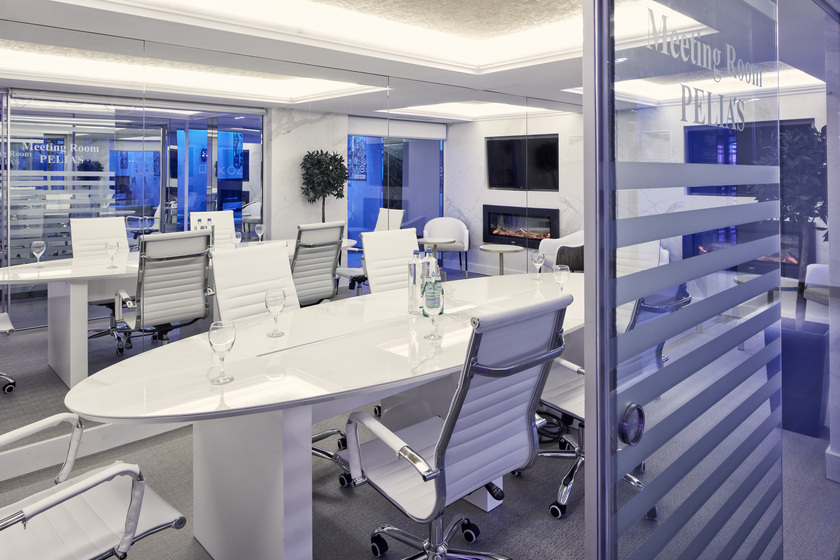
At Epirus Palace, the Pelias Meeting Room has been designed with precisely this purpose in mind, offering a maximum capacity of 10 people.
In such cases, the priority is not additional square metres, but a space that creates the right atmosphere for a focused and productive business meeting.
20–50 Attendees: Workshops, Training Sessions and Small Corporate Meetings
As the number of attendees increases, flexibility becomes an increasingly important factor.
An event for 30 or 40 people may require Theatre Style for a presentation, Classroom Style for a training session or U-Shape when the objective is discussion and active participation.
Common events within this category include:
- Workshops
- Training programmes
- Small seminars
- Departmental meetings
- Management meetings
- Corporate presentations
The key is to avoid selecting a room simply because it can technically accommodate the required number of attendees. There should be enough space for the appropriate setup without making the environment feel disproportionately large for the group.
50–100 Attendees: Seminars, Professional Events and Corporate Presentations
For events with 50 attendees or more, choosing the right space involves additional considerations.
Beyond seating arrangements, you may also need:
Presentation space, projection equipment, microphones, circulation aisles, a registration desk or even dedicated areas for coffee breaks and networking.
For events of this scale, Epirus Palace offers several options, including Dioni, Zeus, Nikandri, Timareti A and Promenia, each with different dimensions and maximum capacities.
Nikandri, for example, is a 95 m² conference room with a maximum capacity of up to 100 attendees, depending on the layout.
This is precisely where the importance of choosing the right configuration becomes clear: seating 100 people does not require the same amount of space as accommodating 100 participants who need tables and individual working surfaces.

100–200 Attendees: When Your Event Grows in Scale
For conferences or corporate events with more than 100 participants, focusing exclusively on the main conference room is no longer sufficient.
It becomes essential to consider the overall flow of the event.
Where will registration take place? Where will attendees gather during breaks? Is additional space required for sponsors or exhibition stands? Will there be parallel meetings?
Events in this category may include:
- Professional conferences and one-day events
- Larger seminars
- Corporate presentations
- Sales meetings
- Training events
- Corporate gatherings
At Epirus Palace, the combined Zeus + Dioni Hall offers a maximum capacity of 160 attendees, providing an intermediate option between smaller meeting spaces and larger conference halls.
200–350 Attendees: Conferences and Larger Professional Events
When attendance exceeds 200 people, the functionality of the venue becomes a determining factor in the organisation of the event.
Visibility towards the stage, acoustics, entry and exit points, technical support and smooth audience circulation should all be considered from the initial planning stages.
For events of this size, larger spaces can be used, such as Timareti, with a maximum capacity of 300 attendees, or Virkenna, which can accommodate up to 350 people.
At this scale, an event is also more likely to require multiple rooms: a main hall for presentations and smaller spaces for workshops, speakers, the organising team or parallel sessions.
350–500 Attendees: Large Conferences and Corporate Events
For an event hosting 400 or 500 people, the concept of a conference room can no longer be considered independently of the event’s overall infrastructure.
You need to assess arrival and registration management, audiovisual equipment, staging, catering requirements, coffee breaks, networking opportunities and potentially accommodation for attendees and speakers.
The Lanassa Hall at Epirus Palace, with a maximum capacity of 470 participants, is one of the available options for events of this scale.
At this level, choosing the right venue should be based on the entire attendee experience rather than solely on the seating capacity of the main conference hall.

500–800 Attendees: Large-Scale Conferences
When a conference approaches or exceeds 500 participants, selecting the appropriate venue becomes even more demanding.
Registration, accessibility, technical infrastructure, staging, catering, breaks, parallel activities and the movement of hundreds of attendees must function as one coordinated system.
Fygos Hall, the largest conference hall at Epirus Palace, covers an area of 800 m² and offers a maximum capacity of up to 800 people. It also features audiovisual equipment for presentations and live broadcasting capabilities.
For events of this scale, having smaller complementary meeting rooms can be just as important as the main conference hall, particularly when the programme includes breakout sessions, workshops or different groups of participants.
Should You Choose a Conference Room That Exactly Matches Your Number of Guests?
Not necessarily.
A conference room with a maximum capacity of 100 people is not automatically the right choice for an event with 100 attendees.
If a Classroom or U-Shape layout is required, or if the setup includes a stage, technical equipment or additional facilities, the actual number of people the room can comfortably accommodate may be lower.
On the other hand, choosing a significantly larger room simply to be on the safe side is not always the right approach either.
A space that is disproportionately large for a small audience can reduce the sense of participation and create unnecessary distance between the presenter and attendees.
The objective is to choose a room that is spacious enough to accommodate the event comfortably, while remaining appropriately sized to maintain engagement and interaction.

Room Size and Layout Should Be Decided Together
The number of attendees is only half the equation.
The other half is how the space will be used.
For example:
- Theatre Style: When you need to accommodate a larger audience, with the stage or speaker serving as the main focal point.
- Classroom Style: When participants require tables, laptops or space for taking notes.
- U-Shape: When discussion and interaction are essential parts of the meeting.
- Boardroom: For smaller professional meetings that require direct communication between participants.
For more information about the different configurations, explore our guide to conference room layouts: Theatre, Classroom, U-Shape or Boardroom.
An Event May Require More Than One Conference Room
This is an important factor that is often overlooked during the initial planning process.
A conference with 300 attendees does not necessarily require just one room with a capacity of 300 people.
It may also need:
- A main conference hall for keynote sessions
- Two or three smaller rooms for workshops
- A dedicated space for speakers and the organising team
- A registration area
- A networking area
- Space for coffee breaks or meals
In such cases, the venue’s ability to support the overall flow of the event becomes more important than the capacity of any individual conference room.

From 10 to 800 Attendees: Choose the Right Space for Your Event
Epirus Palace features 11 conference and meeting rooms in Ioannina, offering options for everything from small private business meetings to large conferences and corporate events with up to 800 attendees.
Choosing the ideal conference room does not, therefore, have to begin with its square metres.
It starts with three simple questions:
- How many people will attend?
- What type of event are you organising?
- How do you want the space to function?
Based on these details, you can plan the appropriate layout and select a venue that truly meets the requirements of your event.
Planning a Conference or Corporate Event in Ioannina?
Share your expected number of attendees, the type of event you are organising and your preferred dates.
The Epirus Palace team will help you select the right conference room and layout to meet your event’s specific needs.